Why Does My Dishwasher Clean the Bottom Rack but Leave the Top Rack Dirty?
If the plates are clean but the glasses still have food on them, start under the top rack. The first thing I’d check won’t cost you a cent.

1What could be blocking the upper spray arm?
Pull out the top rack and look underneath. See that long plastic bar with the little holes? That’s the spray arm. It spins and sprays water up into your glasses. A wooden spoon sticking up from the basket below can catch that arm and stop it turning. That’s how you can end up with clean plates downstairs and bits of breakfast still stuck to the glasses upstairs.
With the cycle finished, move the spoon and give the arm a gentle turn by hand. Does it go all the way around? If it does, slide the rack back in and see how the glasses come out on the next wash.
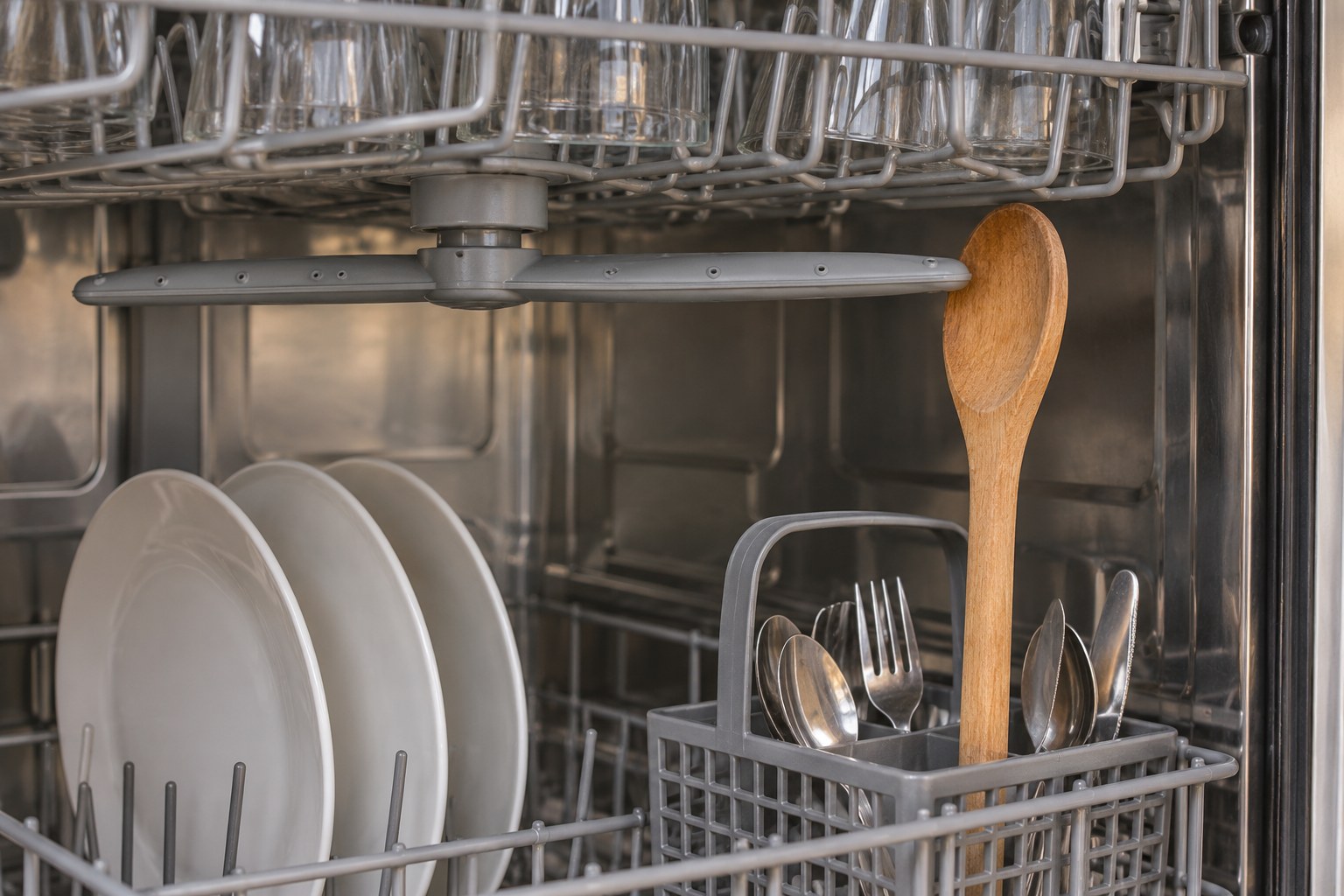
If the glasses come out clean, you’re done. That was a $0 fix. Next time you load a baking sheet or a tall utensil below, give the arm the same quick turn before you shut the door.
Partner offer for US homeowners
Planning for the next repair bill?
You can get a free Choice Home Warranty quote for appliances and systems that are working today. A new plan excludes the dishwasher problem you already have.
We may earn a commission if you use this link. How this works
2Did the trouble start after you moved the rack?
If the arm already turns freely, follow it to the back of the rack. On many adjustable racks there’s a short tube underneath. When you push the rack all the way in, that tube meets an opening on the back wall. Wash water comes through that opening, along the tube and out through the arm under your glasses.
That connection is worth a look if you recently lowered the rack to fit taller glasses. Take the dishes out so you can see both sides. Is one side sitting higher than the other? Is something behind the rack keeping it from sliding home?
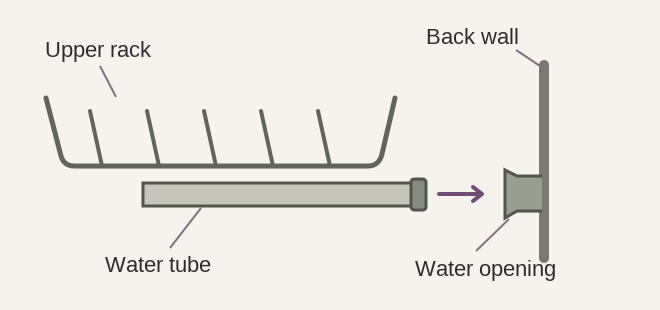
If the rack looks crooked, set both sides at the same height. Now slide it in slowly and watch where the tube meets the back wall. It should line up with the opening and slide into place. If the rack stops short, pull it back out and look for a dish in the way before you try closing the door.
Before the next wash, look at the control panel, too. Some machines let you wash just one rack. If yours was set to Lower Rack Only, select a cycle that washes both. A perfectly good upper arm can’t do much on a cycle that sends the wash water downstairs.
3What if the arm turns but the little holes are clogged?
Look along the arm in good light. Each little hole aims a stream of water at the dishes. A bit of food wedged in one can leave some glasses dirty even though the arm has room to spin. If you can see debris, I’d clean the arm before spending anything.
Let the dishwasher cool, then unplug it or switch it off at the breaker before you take the arm off.
- 1Look at the middle of the arm. That’s where it attaches to the rack. Some have a plastic ring you turn to release the arm. If you can’t tell how yours comes off, leave it attached and wipe away any food you can reach. Forcing that little fitting can turn a free fix into a broken part.
- 2Clear the holes. If you’ve taken the arm off, rinse it under warm running water. Use the tip of a wooden toothpick to gently loosen anything stuck in a hole, then rinse again so the bits wash out.
- 3Give it a spin. If you removed the arm, fasten it back in place. Give it a gentle turn by hand. Once it’s secure and clears the dishes, restore power and try your next regular load.
Give each glass a little room on that test load, with its opening facing down. Two bowls tucked tightly inside one another can shield each other from the spray, even when everything is working.
4When is a new spray arm worth the money?
If the arm is cracked and the dishwasher’s otherwise been good to you, I’d fix it. A replacement arm can run about 30 bucks for the part itself. Snap a photo of the label inside the dishwasher door and use it to check the fit before you buy. Two arms can look alike and still attach differently.
Here’s what I’d look for when I unloaded the next wash.
- The top glasses are clean after moving the spoon, leveling the rack or rinsing the arm.
- Keep the arm you have. You’ve fixed what was keeping the water from reaching the glasses.
- The top is still dirty, the bottom is clean, and the arm looks sound.
- I’d keep my money for now. A clean arm that spins freely can still get too little water. Dirty glasses alone won’t tell you which part to buy.
- Food is sticking on both racks now.
- Check the filter next. It’s the screen at the bottom that catches food. If yours lifts out and it’s full of grit, give it a rinse. Here’s how to keep the filter and dishwasher clean.
If you’ve already got a bigger repair estimate, here’s how I’d decide whether the dishwasher is worth fixing. If you’re pricing a new one, compare that estimate with what a replacement costs once it’s installed. And if moving that spoon did the trick, put the glasses away and call it fixed.
Frequently Asked Questions
Is the upper spray arm the same thing as the middle spray arm?
The name varies. The arm in this guide hangs under the upper rack and sprays upward into it. Some dishwashers also have a sprayer on the ceiling. Use the location in your model’s parts drawing to pick the right one.
What if the glasses are cloudy but the food washed off?
A cloudy film is a different clue from stuck-on food. If the bowls and glasses came out free of food, I’d look at hard-water residue or etched glass before spending money on a spray arm.
Should I run a second wash after every check?
If you find a clear cause, such as a spoon physically catching the arm, fix that and check your next regular load. If nothing was in the way, you can check the rack height and look for clogged holes before running another cycle.
- Whirlpool — Spray arm not working — Loading obstructions, spray openings and rack-specific wash options.
- LG — Dishwasher rack adjustment and care — How an adjustable rack lines up with the rear water opening.
- GE Appliances — Wash zones — Upper and lower wash-zone selections on equipped models.
- Whirlpool — Cloudy glassware — Cloudiness, hard-water residue and etching differ from stuck-on food.
- Bosch — How to clean dishwasher spray arms — How to rinse the arms and clear food from the spray holes.
- LG — Spray arm maintenance — Illustrated procedure and a check after the arm is reinstalled.
- Choice Home Warranty — Common questions — Plan eligibility and exclusions for pre-existing conditions.
The Dishwasher Series
- 1How old is my dishwasher?Decode the serial number and see where it sits against a typical lifespan.
- 2How Long Does a Dishwasher Last?What changes as it ages, what can shorten it, and the Bosch warranty exception.
- 3Should You Repair or Replace a Dishwasher?The decision, in one place — with the age line and the cost line that settle it.
- 4How Much Does It Cost to Replace a Dishwasher?The complete bill, including installation, required parts, delivery and removal of the old machine.